Thursday, 14 April 2011

Effective news writing


The White Rabbit put on his spectacles.
     ‘Where shall I begin, please, Your Majesty?’ he asked.
    ‘Begin at the beginning,’ the King said, very gravely, ‘and go on till you come to the end; then stop.’


Narrators and report writers may find this advice from Alice’s Adventures in Wonderland very useful. Effective news writers ignore it.

What happens when friends come to you with some interesting news or gossip? They don’t start with the history or background behind the story – they engage your attention with the most interesting piece of information and fill in the detail as the conversation flows, and as time allows.

A news story should be written in much the same way, with an opening designed to arrest attention, and the key facts presented in the first few lines. Details and less important facts are presented later. This style of writing is sometimes referred to as an inverted pyramid.

▼
News is written like this for two main reasons:

• Reading newspapers and newsletters is generally regarded as a casual rather than dedicated reading activity. Most of us browse and will only read items that attract our attention quickly. Often we will only take in the opening paragraph of a story, before switching our attention to something else.

• Editors are constantly forced to cut stories to fit the spaces in the paper. The easiest way to do this is to cut from the end upwards. Placing the key facts early in the story protects them from being lost in the editorial process.

Openings

Engaging the reader is key to success. News writers typically spend far more time and attention on openings than on the rest of the article. The reader’s attention is caught by headlines (dealt with below) and leads, the first few lines of the story. A good lead not only summarises the key facts but also sets the structure, leading both writer and reader into the way the rest of the story will unfold. Take a look at this example:

Over 1,000 readers have taken part in a major listening event held by Pooltown Library Improvement Partnership. Their message to the organizers? ‘Bring back the books.’

• A good lead answers one or more of the key questions, Who, What, Where, When, Why and How.

• A good lead focuses on people and on the interests of the target reader.

• A good lead includes at least one arresting key fact (‘over 1,000 readers’) and emphasises the importance of the story (‘major listening event’).

• A good lead points to how the story will develop – in this case, what the event revealed and how the findings may be used to improve the service.

• A good lead sets the pace and rhythm of the story.

Here’s a example of a bad lead:

An important reminder to all of our members and to those wishing to join us! Your database details are the most important item of information we have about you, so please ensure that all of your details are correct and updated regularly. Remember, your database records are your passport to participation!

• This is not news, despite the writer’s attempt to add urgency by using the word ‘important’ twice and by the amateurish use of exclamation marks. There are no key facts or reported actions.

• The fragmented opening non-sentence sets the tone of the piece, which reads more like a warning notice than a news item.

• The lead aims to focus on the target reader, but the focus is lost by addressing both the existing member and the potential member at the same time. The hectoring tone is likely to put off both sets of reader.

• In general it is best to avoid ‘we’ and ‘our’ in news writing as it looks unprofessional and reduces the objective credibility of the piece.

• There are several redundant words and irritating repetitions. The same message could be carried using half the number of words with no loss of meaning.

• Where is the ‘story’ going from here? The lead does not set the structure for writer or reader to follow through.

Headlines

The job of the headline is to draw the attention of the reader to the story. Few of us have the time to read all the stories. We rely on the headline to provide a summary to help us decide whether the article is worth reading. The effective headline is both informative and creative. It distils the essence of the story and stirs the reader’s curiosity.

A headline should be short – usually not more than seven words long – though it may carry a sub-headline or deck underneath to add more information. Good headline writers only use a deck if it adds to the impact of the headline and doesn’t steal the key point in the lead paragraph.

Except in editorial pieces the headline shouldn’t carry an author’s viewpoint, but subtle use (or misuse) of language will ensure that the headline helps to establish the tone of the story. One word change can alter the tone entirely:

MOUNTED POLICE CHARGE CROWD

MOUNTED POLICE CLEAR CROWD


Headlines can be difficult to write; it’s a challenge to summarise a story in a few words, especially as it’s important to write something sufficiently different from the words used in the lead paragraph.

Suppose you need to write a headline; try these tips:

What’s new?

Re-read the story asking the question, ‘What is new here?’ The news element should form the basis of your headline.

Think people

Remember news is people. The human interest always catches the eye and stirs the emotions.

Have fun

Think of some key words in the story and try some word association to develop an angle. Word plays and puns can be effective, but be careful – poor punning or over-use of alliteration is the mark of an amateur.

Think visual

What picture comes to mind as you read the story? Can you transform your mental image into a word picture for your headline?

Think verb

An imaginative verb can make a headline stand out, an active one enlivens.

Change perspective

Write the headline from a different perspective to the main one used in the story. If the story is about a new project, try writing the headline from the standpoint of the people it will affect.

Use quotes

Is there a quote that usefully sums up the story? Don’t overuse this technique, but it sometimes offers possibilities.

Be specific

Key facts – such as a large number or a surprising statistic – can form the basis of a good headline.

Whatever headline you write, always be aware that the editor may choose a different one. This does not necessarily mean that yours was no good. It may be that for reasons of space or layout a different type or length of headline was more appropriate. Always add a headline to your article – it helps you sell your story to the editor before it reaches the reader.

CRAFT

This acronym for good journalism or copywriting stands for:

• Clarity

• Rhythm

• Accuracy

• Freshness

• Taste


Again, let’s imagine you are the news writer. How can you make good use of your CRAFT?

Clarity

Newspapers are read rapidly, so they need to be understood quickly and easily. Avoid difficult words, complex sentences, jargon, technical language, unexplained abbreviations and elaborate expression.

Rhythm

A news story should have good pace, with a certain urgency. Feature stories may be more reflective but never laboured. Use the lead to establish the rhythm, structure and pace of the piece. Use the ‘active’ voice with strong, direct verbs. End the story with a powerful sign-off or a call to action.

Accuracy

Check your facts carefully. If something in your article is inaccurate or untrue it can damage the credibility of the publication and the organisation. In extreme cases it could even lead to legal action. Do your research diligently. Avoid the temptation to ‘boost’ your argument by over-stating a case. Earn credibility by treating your reader with respect.

Freshness

Originality is precious in all writing. In news writing, which is often done under the pressure of a deadline, it’s easy to slip into cliché or lean too heavily on words and phrases that have been used before on the subject. A good test is whether what you have written interests you when you read it. If it doesn’t, you can be sure it won’t engage your reader either.

Taste

Writing is a powerful tool and it’s surprisingly easy to cause offence. Always reread your work with the sensibilities of your readers and other groups involved clearly in mind. Consider your words and the assumptions that lie behind your words from a variety of cultural standpoints.

Quotable Quotes

Direct quotation can be useful in a number of ways:

• It emphasises the ‘people’ elements of your story.

• It can keep the article fresh and lively by introducing a new ‘voice’.

• It can help to answer the questions, Why, Who, What or How.

• Using a quote from an authorative source can reinforce credibility.

• Using voices from inside your organisation can help make it more human for your readers.

• Using voices from your reader community creates empathy with your reader.

You should, however, avoid corporate platitudes and tokenism in your articles. Direct quotation should only be used if it adds value, colour, genuine information or an interesting viewpoint.

Proofreading and Editing

These should be tackled in three stages:

Read for errors

Check for obvious errors first, or they will distract you when you start to read for meaning. Use the spell-check to help but be aware of its limitations and never use the ‘Replace All’ button.

Read for meaning

Read the entire story, concentrating on the big picture. Does the story make sense? Is it newsworthy? Is it accurate and fair? Is it clear and concise? Is the lead interesting and engaging? Are you happy with the tone, rhythm and structure? Does it end well? How will the reader respond?

Read for detail

Read the story once again, with a microscopic eye for detail. Check spelling, grammar, names, dates and facts. Check any information you are unsure about. Tighten up any slack writing and remove redundant words and phrases, or any other padding.

Submit the story for publication only when you are happy that it meets the standards you set for yourself and the standards expected by the publisher and the reader. You may not win the Pulitzer Prize, but you will certainly have improved your chance of seeing your words in newsprint.

‘Put it before them briefly so they will read it, clearly so they will remember it  and, above all, accurately so they will be guided by its light.’

Joseph Pulitzer, founder of the Pulitzer Prize for Journalism (1863-1952)

Quotes about Innovation

Here's the next section of quotes from my book 1000 Great Quotations for Business, Management & Training.


An updated version of the book is newly available as part of my Almost Free Kindle titles both in the UK and in the USA.


The only sustainable competitive advantage comes from out-innovating the competition.

James Morse, US judge (b. 1940)


Always remember that someone, somewhere, is making a product that will make your product obsolete.

George Doriot, US executive, founder of American R & D (1899-1987)


Once an organisation loses its spirit of pioneering and rests on its early work, its progress stops.

Thomas J Watson, US businessman, founder of IBM (1874-1956)


Don’t try to innovate for the future. Innovate for the present.

Peter Drucker, US management author (1909-2005)


We should do something when people say it is crazy. If people say something is ‘good’, it means someone else is already doing it.

Hajime Mitarai, Japanese electronics businessman (1938-1995)


In England an inventor is regarded almost as a crazy man, and in too many instances invention ends in disappointment and poverty. In America an inventor is honoured, help is forthcoming, and the exercise of ingenuity, the application of science to the work of man, is there the shortest road to wealth.

Oscar Wilde, Irish dramatist, poet (1854-1900)


Oscar Wilde


Originality is a thing we constantly clamour for, and constantly quarrel with.

Thomas Carlyle, British essayist, historian (1795-1881)


Things don’t turn up in this world until somebody turns them up.

James A Garfield, US President (1831-1881)


A new scientific truth does not triumph by convincing its opponents and making them see the light, but rather because its opponents eventually die, and a new generation grows up that is familiar with it.

Max Planck, German physicist (1858-1947)


Invention is the mother of necessity.

Thorstein Veblen, US economist, social scientist (1857-1929)


Why, the greatest invention in history is the safety pin. The second greatest is perforated toilet paper.

Herbert Khaury, known as Tiny Tim, US entertainer (1932-1996)


My father worked for the same firm for twelve years. They fired him. They replaced him with a tiny gadget this big. It does everything that my father does, only it does it much better. The depressing thing is my mother ran out and bought one.

Allen Stewart Konigsberg, known as Woody Allen, US film actor, director (b. 1935)


Wednesday, 13 April 2011

Quotes about Individuality

Here's the next section of quotes from my book 1000 Great Quotations for Business, Management & Training.


An updated version of the book is newly available as part of my Almost Free Kindle titles both in the UK and in the USA.


Be Daring

Be First

Be Different.

Anita Roddick, British retail executive, founder of The Body Shop (1942-2007)


Man’s main task in life is to give birth to himself, to become what he potentially is. The most important product of his effort is his own personality.

Erich Fromm, US psychologist, philosopher (1900-1980)


The reasonable man adapts himself to the world. The unreasonable man persists in trying to adapt the world to himself. Therefore all progress depends on the unreasonable man.

George Bernard Shaw, Irish playwright, essayist (1856-1950)


Follow the path of the unsafe, independent thinker. Expose your ideas to the dangers of controversy. Speak your mind and fear less the label of ‘crackpot’ than the stigma of conformity.

Thomas J Watson, US businessman, founder of IBM (1874-1956)


I used to think anyone doing anything weird was weird. Now I know that it is the people that call others weird that are weird.

Paul McCartney, British musician, co-founder of The Beatles (b. 1942)


No one can possibly achieve any real and lasting success or get rich in business by being a conformist.

J Paul Getty, US industrialist (1892-1976)


Few great players make the transition into management. The reason is that great players are normally like soloists in an orchestra. They perform alone and tend to look down at team-mates with lesser ability.

Bob Paisley, British football manager (1919-1996)


Never play a thing the same way twice.

Louis Armstrong, US jazz musician (1900-1971)


In order to be irreplaceable one must always be different.

Gabrielle Bonheur ‘Coco’ Chanel, French fashion designer (1883-1971)


You cannot step twice into the same river, for other waters are always flowing on to you.

Heraclitis, Greek philosopher (c. 535 – c. 475 BC)


I can’t stand to sing the same song the same way two nights in succession. Let alone two years or ten years. If you can, then it ain’t music, it’s close-order drill or exercise or yodelling or something, not music.

Eleanora Fagan, known as Billie Holiday, US jazz singer (1915-1959)

Tuesday, 12 April 2011

Quotes about Imitation

Here's the next section of quotes from my book 1000 Great Quotations for Business, Management & Training.


An updated version of the book is newly available as part of my Almost Free Kindle titles both in the UK and in the USA.


No man ever yet became great by imitation.

Samuel Johnson, British poet, critic, lexicographer (1709-1784)


When people are free to do as they please, they usually imitate each other.

Eric Hoffer, US philosopher, author, longshoreman (1902-1983)


If you steal from one author, it’s plagiarism; if you steal from many, it’s research.

Wilson Mizner, US playwright, author (1876-1933)


We forfeit three-fourths of ourselves to be like other people.

Arthur Schopenhauer, German philosopher (1788-1860)


The ideas I stand for are not mine. I borrowed them from Socrates. I swiped them from Chesterfield. I stole them from Jesus. And I put them in a book. If you don’t like their rules, whose would you use?

Dale Carnegie, US lecturer, author (1888-1955)

Monday, 11 April 2011

Quotes about Images (and some image puzzles)

Here's the next section of quotes from my book 1000 Great Quotations for Business, Management & Training (slightly out of alphabetical sequence, apologies).


An updated version of the book is newly available as part of my Almost Free Kindle titles both in the UK and in the USA.

What concerns me is not the way things are, but rather the way people think things are.
Epictetus, Greek philosopher (55-135 AD)

Things do not pass for what they are, but for what they seem. Most things are judged by their jackets.
Baltasar Gracián y Morales, Spanish philosopher, author (1601-1658)

We don’t see things as they are, we see things as we are.
Anais Nin, US author (1903-1977)

An image is not simply a trademark, a design, a slogan or an easily remembered picture. It is a studiously crafted personality profile of an individual, institution, corporation, product or service.
Daniel J Boorstin, US media author, historian (1914-2004)

The right name is an advertisement in itself.
Claude C Hopkins, US advertising pioneer (1866-1932)

Tell them it’s Old Crow. Then give them another taste of Old Crow, but tell them it’s Jack Daniels. Ask them which they prefer. They’ll think the drinks are quite different. They are tasting images.
David Ogilvy, US advertising executive, author (1911-1999)

There are always two people in every picture: the photographer and the viewer.
Ansel Adams, US photographer (1902-1984)

And here are some of my favourite image puzzles. What do you see in each picture? (Not everyone sees the same thing.) Press the Show/Hide button at the end to check your answers.


Sunday, 10 April 2011

Quotes about Imagination

Here's the next section of quotes from my book 1000 Great Quotations for Business, Management & Training

An updated version of the book is newly available as part of my Almost Free Kindle titles both in the UK and in the USA.


Imagination rules the world.

Napoleon Bonaparte, French soldier, statesman, revolutionary (1769-1821)


Imagination is more important than knowledge.

Albert Einstein, German physicist (1879-1955)


Everything you can imagine is real.

Pablo Picasso, Spanish painter (1881-1973)


A rock pile ceases to be a rock pile the moment a single man contemplates it, bearing with him the image of a cathedral.

Antoine De Saint-Exupéry, French author (1900-1944)


The man who has no imagination has no wings.

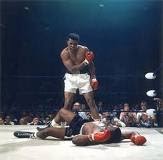
Muhammad Ali, US heavyweight boxing champion (b. 1942)

Ali defeats Sonny Liston


He who has imagination without learning has wings and no feet.

Joseph Joubert, French essayist, moralist (1754-1824)


Reason can answer questions, but imagination has to ask them.

Ralph Waldo Gerard, US psychologist, author (1900-1974)


Microsoft’s only factory asset is the human imagination.

Bill Gates, US computer engineer, entrepreneur (b. 1955)


What is now proved was once only imagined.

William Blake, British poet, painter, engraver (1757-1827)


Imagination is a quality given a man to compensate him for what he is not, and a sense of humour was provided to console him for what he is.

Oscar Wilde, Irish dramatist, poet (1854-1900)

Saturday, 9 April 2011

Quotes book now available 'almost free' on Kindle

I have just completed the publication of my updated version of 10000 Great Quotations for Business, Management & Training as an Amazon Kindle title available in my Almost Free series. The link I've provided above is to the UK site, but it's also generally available here on Amazon.com.


I compiled this collection originally because I needed it myself. That is to say, my mountain of notes, cuttings and print-outs was threatening a landslide in my store cupboard. I could lay a hand on an appropriate quotation just when I required it, provided I had two days’ notice of the occasion and nothing else to do but sift through the pile built up over several years. 

The project to create a book of quotations from the best of this random collection put a semblance of order back into my life and on the way provided me with a great deal of pleasure as I rediscovered some of the wise and witty observations that stirred me enough to write them down at the time, only to bury them under my own disorder.

One of the most difficult tasks in selecting material for the book was deciding what to leave out. (My full collection extends to more than 3,000.) It is a highly subjective choice, one which is bound to reveal my own slants and prejudices. There is a bias towards business, management and training because that's how I used to make my living as a public presenter, but many readers have told me how they apply to their own lives, and I trust you will find that too. Many of the quotes stem from seemingly unrelated disciplines such as sport or mass entertainment, and many have been originally spoken or written in an age quite different from the one we know today, but still seem to apply.

Although I have tried to ensure as much variety as possible and offer a wide range of authors, some names do crop up again and again. The American essayist Ralph Waldo Emerson, for example, is a notable quotable. Ironically, he is the man who once famously said ‘I hate quotations.

The astonishing Albert Einstein is another I keep returning to, especially for his comments on creativity and learning. Motor manufacturer Henry Ford was a master of the memorable aphorism, as was author Mark Twain.

Mark Twain (Samuel Clemens)
I have tried to reflect modern management thinking with an assortment of observations from contemporary ‘gurus’, especially those I most admire and in some cases have worked with – Tom Peters, Rosabeth Moss Kanter, Warren Bennis, Peter Drucker. I do hope that the tiny nuggets of business philosophy I have scattered among these pages will inspire readers to discover or renew acquaintance with their stimulating books or, in the case of those who still tread the conference platforms, go along to one of their electrifying presentations.


I have sorted this selection of quotations alphabetically into themes and subjects that I trust readers will find appropriate. Some of the distinctions are quite subtle; there are obvious links between Achievement, Success and Winning, for example, and between Failure and Mistakes. I recommend ‘surfing’ around associated themes for the best results. One of the advantages of this new Kindle edition over the paperack is that the reader can quickly jump to the required section using the ‘Go To’ function and hyperlinks, but this is also the sort of book that, I hope you will agree, rewards browsing.


I hope I have succeeded in avoiding the predictable and over-familiar. I want readers to be surprised by unexpected gems, to experience the same pleasure I felt when I first came across them, to nod their heads at succinct sagacity, smile at truths eloquently revealed, have their minds expanded by insightful observation and their hearts lifted by inspirational thoughts.


I have tried to sow a little wit among the wisdom – a seedling from Groucho Marx here, from Woody Allen there. Every so often a cartoon character I have uninventively named Murphy pops up with one of those ironic maxims that send up business and office life and help us remember what my friend and sometime colleague Benjamin Zander calls Rule Number 6: ‘Don’t take yourself so goddam seriously’.

Murphy

My thanks to cartoonist Frank Taylor for creating the Murphy character and to his colleagues at NB Group who helped to realise the original print edition. Working backwards along the production line, an encore of thanks to Julie McPherson and Sue Little for converting my bits of paper into workable manuscript, to Laura James and my son Joe for their hours of help researching sources, and especially to my wife Paula, not only for encouraging me to start the project but for shaping it in a publishable form.

The original print edition of this little book of quotations found its way into offices and homes all over the place (and is still available on Amazon). I trust my new and updated Kindle edition will find new readers in even more places and circumstances.  By making it 'almost free' I'm trying to make it accessible to all.


Of course I will still continue to post extracts from the quotes daily on this blog, but I do hope you will enjoy having the whole selection collected in one place. Enjoy.